

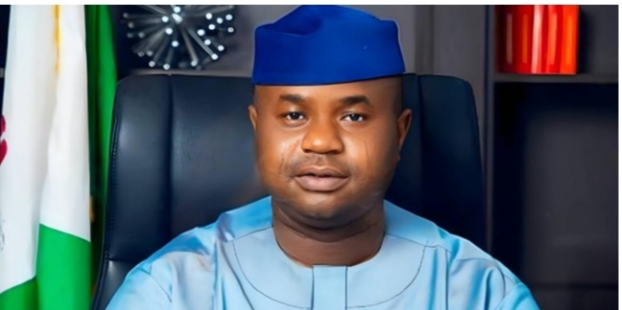
According to top sources, Seyi Tinubu, son of President Bola Tinubu, alongside other politically connected figures described as “who is who” in the country’s power circle, are expected to be present at the celebration.
Despite ongoing public outrage over alleged alterations to key provisions of tax-related legislation, the Chairman of the Federal Inland Revenue Service (FIRS), Zach Adedeji, is set to celebrate his birthday in Dubai, the United Arab Emirates, in a lavish ceremony, SaharaReporters has learnt.
Multiple sources familiar with the plans told SaharaReporters on Saturday that Adedeji is set to mark his birthday on January 6 in the United Arab Emirates, with a high-profile guests list expected to attend the event.
According to top sources, Seyi Tinubu, son of President Bola Tinubu, alongside other politically connected figures described as “who is who” in the country’s power circle, are expected to be present at the celebration.
“FIRS Chairman Zach Adedeji will celebrate his birthday in Dubai on January 6. Seyi Tinubu and several top political and business figures will be in attendance,” one of the top sources revealed.Politics
The planned celebration comes at a time when Adedeji and the FIRS are under intense public scrutiny over allegations that certain provisions of recently debated tax legislation were altered in ways that could favour powerful interests.
SaharaReporters previously reported that President Bola Tinubu announced that his government would commence the implementation of Nigeria’s new tax laws on January 1, 2026, as scheduled, despite ongoing public controversy over alleged alterations to some provisions of the legislation.
In a statement issued on December 30, 2025, and signed by himself, President Tinubu said the new tax laws, including laws that already took effect on June 26, 2025, would proceed without delay, describing the reforms as critical to strengthening the country’s fiscal framework.
“The new tax laws, including those that took effect on June 26, 2025, and the remaining acts scheduled to commence on January 1, 2026, will continue as planned,” the President had stated.
Tinubu had described the reforms as “a once-in-a-generation opportunity to build a fair, competitive, and robust fiscal foundation” for Nigeria, stressing that the measures were not introduced to increase taxes but to overhaul the system.
According to him, the tax laws “are not designed to raise taxes, but rather to support a structural reset, drive harmonisation, and protect dignity while strengthening the social contract.”
The President had urged stakeholders across the public and private sectors to support the implementation phase, noting that the reform process had now moved firmly into the delivery stage.
Addressing concerns over alleged changes to some sections of the tax laws after their passage, Tinubu acknowledged the public discourse but dismissed calls for a halt in implementation.
He had further noted that trust in governance is built over time, not through “premature, reactive measures,” and reiterated his administration’s commitment to due process and the integrity of enacted laws.
The alteration controversy began in December 2025, when a member of the House of Representatives, Abdussamad Dasuki, raised a matter of privilege claiming that the versions of the tax laws published in the Federal Gazette contained provisions that were not approved during the legislative debates.
Lawmakers and public commentators suggested there are discrepancies between what was passed by both chambers of the National Assembly and the copies subsequently gazetted by the Nigerian government.
SaharaReporters had also reported that the House of Representatives Minority caucus set up a seven-member committee to investigate allegations that the recently assented tax reform laws were altered after being passed by the National Assembly.
Headed by the lawmaker, Afam Ogene, representing Ogbaru Federal Constituency in Anambra State, the committee was tasked with unraveling the circumstances surrounding the alleged discrepancies and advising the caucus on steps to safeguard the national interest.
The decision follows a motion raised during plenary by Abdussamad Dasuki, a representative from Sokoto State, who alleged that the tax laws published in the official gazette are materially different from the harmonised versions passed by both chambers of the National Assembly.
Although Speaker Tajudeen Abbas had earlier set up a seven-member panel to look into the allegation, the House later directed the Clerk of the National Assembly to re-gazette the harmonised version of the laws and issue a Certified True Copy as part of efforts to calm the growing controversy.
Notwithstanding appeals for the Nigerian Government to suspend the implementation of the new tax regime pending clarification of the alleged alterations, the government on Thursday went ahead with its rollout, in line with President Bola Tinubu’s directive, as the new tax framework took effect.
In a statement released on Friday, The minority Leader, Kingsley Chinda, alongside three other leaders of the caucus, said the decision to establish a separate committee followed extensive consultations.
“We wish to inform our members that after wide-ranging consultations with relevant stakeholders over the lingering controversy surrounding allegations of unlawful alterations to the tax reform laws passed by the National Assembly and assented to by the President, and in view of the executive’s resolve to commence implementation of the laws from January 1, 2026, the leadership of the minority caucus of the House of Representatives considered it necessary to constitute a seven-man fact-finding committee to thoroughly examine all issues linked to this scandal,” the statement had said.
Chinda had said the opposition caucus considered an independent inquiry necessary in the interest of accountability.
