

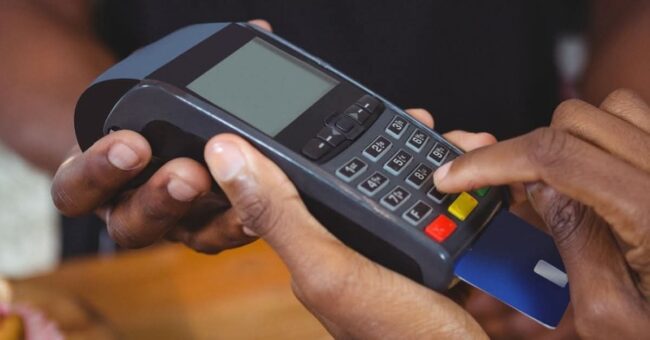
The Central Bank of Nigeria (CBN) has directed banks and non-bank acquirers to implement multi-factor authentication for foreign card transactions exceeding $200 per day.
In a circular dated December 18 and signed by Rita Sike, director of the financial policy and regulation department, the CBN asked banks to implement the same authentication measure for transactions above $500 per week and $1,000 per month, and configure point-of-sale (POS) terminals for foreign card use.
The regulator said the move is part of efforts to ensure uninterrupted and efficient local currency withdrawals, payments, and transfer services for users of foreign-issued payment cards across Nigeria.
The apex bank said the measures are aimed at improving access to funds, enhancing security, and boosting user experience for tourists and Nigerians in the diaspora visiting the country.
The CBN also directed banks and non-bank acquirers to configure all automated teller machines (ATMs), POS, and virtual terminals to accept international cards with Nigerian acquirers, comply fully with card association standards, and possess the necessary certifications to enable seamless transaction processing.
The organisation also instructed institutions to maintain system availability to guarantee uninterrupted transaction processing.
“In this regard, banks and non-bank acquirers shall: implement multi-factor authentication for all withdrawals and online transactions exceeding $200 per day, $500 per week, and $1,000 per month (or its equivalent),” the circular reads.
“With respect to ATM cash withdrawal transactions, ensure compliance with approved cash withdrawal limits.
“Clearly communicate the applicable exchange rate, which shall be market- driven and based on the prevailing official rate, as well as other associated charges to users. Transactions should only be completed after the user has accepted the terms (with evidence obtained).
“Maintain sufficient liquidity position to settle transactions.
“Settle transactions for the merchant in local currency (naira).
“Implement transaction monitoring to detect unusual patterns in the use of foreign cards across all terminals.
“Strengthen know-your-customer and anti-money laundering controls for merchants handling foreign card payments.
“Require their merchants to ensure that all their copies of card-present transaction receipts are properly signed and to request for valid identity documents where a transaction appears suspicious.”
In addition, banks and non-bank acquirers were asked to report suspicious transactions to the Nigeria Financial Intelligence Unit (NFIU), and recalibrate fraud-monitoring systems to reduce false declines on legitimate transactions.
The circular also said card acceptance devices must be equipped with contactless payment options for low-value transactions and that consumer complaints be resolved within approved timelines — warning that unresolved escalations to the apex bank would attract sanctions.
“Furthermore, acquirers shall implement and maintain robust, auditable chargeback management processes aligned with applicable card-scheme rules and CBN guidelines (including but not limited to timely case intake, evidence collation, refund execution, and post-incident analytics),” the apex bank said.
“Require, verify, and retain documentation (including terminal approval slip and signed merchant receipt, and item/service description) for card transactions for use in dispute resolution and chargebacks. The records shall be retained for a minimum of 12 months and be readily retrievable within 24 hours of request by the Acquirer or Scheme.
“Provide quarterly training to their merchants and agent networks on dispute handling and chargeback processes.”
The regulator advised tourists and Nigerian returnees experiencing challenges using foreign-issued cards to report such incidents to the CBN’s consumer protection department via complaint4cbn@cbn.gov.ng.
The CBN said it will monitor compliance with the directive and impose appropriate sanctions on institutions found to be in breach.
