

Pipeline Infrastructure Nigeria Limited (PINL) says host communities and stakeholders along the Trans Niger Pipeline (TNP) and the Eastern Gas Network (EGN) will play a decisive role in whether Nigeria meets its oil and gas production targets for 2027 and 2030.
The Nigerian National Petroleum Company Limited (NNPC Ltd) is targeting crude oil production of 2 million barrels per day by 2027 and 3 million barrels per day by 2030. It is also aiming for 12 billion standard cubic feet of natural gas per day by 2030.
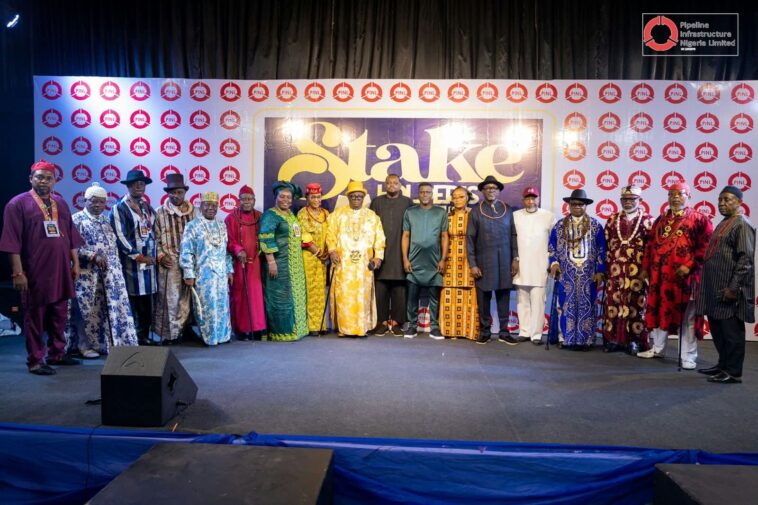
PINL is the integrated pipeline infrastructure company responsible for the Eastern corridor of the Trans Niger Pipeline. The company made the case at its bimonthly stakeholders meeting with TNP host communities in Port Harcourt.
Dr. Akpos Mezeh, General Manager, Community and Government Relations, said the industry is entering a period of renewed growth. He linked rising output in part to the stability of the pipeline networks that carry it. Meeting the targets, he said, will depend on closer cooperation between the company, host communities and every stakeholder along the corridors.

He pointed to NNPC Ltd’s recently released audited results for 2025. The company reported a Profit After Tax of ₦7.2 trillion, up 33 percent from ₦5.4 trillion in 2024.
“More importantly for our discussion today, crude oil and condensate production averaged 1.77 million barrels per day in 2025, the company’s highest production level in five years,” he said. Natural gas production averaged 7.2 billion standard cubic feet per day, the highest in three years.
Stakeholders at the meeting expressed satisfaction with PINL’s operations. They urged the Federal Government to sustain and expand its contract.
Engr. Omojevwhe Akponime is Head, Field Operations, Eastern Corridor, at the NNPC Project Monitoring Office. He said NNPC’s daily reviews show the lines in PINL’s area of coverage running green. Recounting a recent NNPC management session, he said: “There is no question for PINL. They said so because they are doing well.”
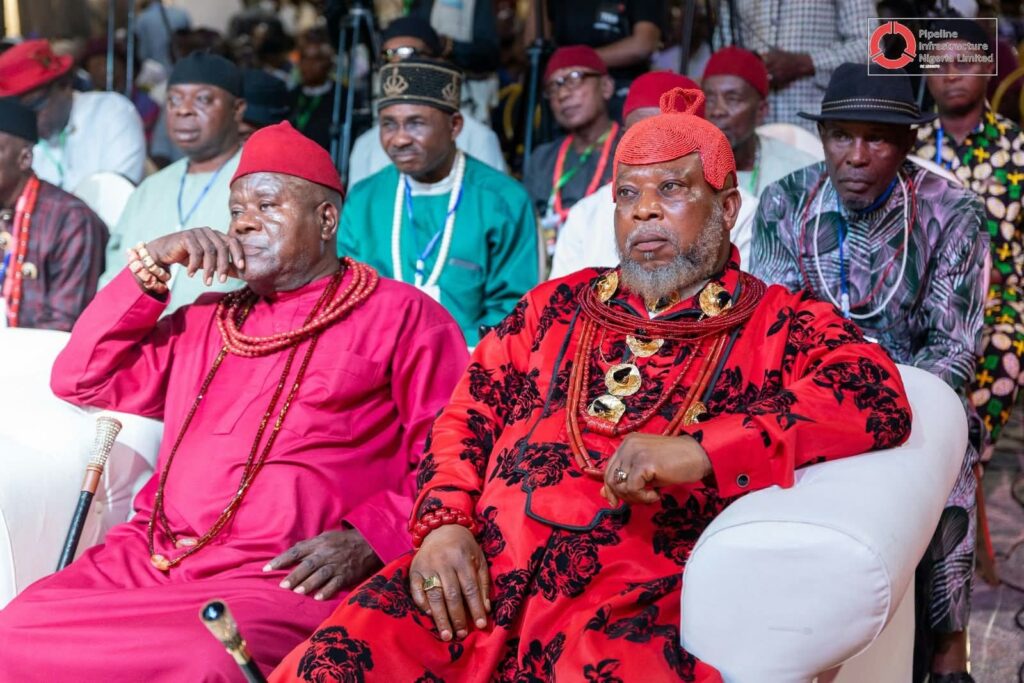
The Eze Eberi-Ugo Omuma, King Onyekachi Amaonwu, tied the national targets to the communities in the room. “For you to get the target, there is no pipeline in Abuja,” he said. “It is here.” He called on monarchs and community leaders to work with the company.
The Eze Ekpeye-Logbo, King Kevin Anugwo, said Ekpeye communities have returned to their farms and fishing waters since crude theft along the line was curbed. For years, soot and spilled crude had made both impossible. “Before you came on board, we were unable to fish in our waters because the crude oil had taken over the place,” he said.
Engr. Legborsi Yamaabana, spokesperson of the Niger Delta Ethnic Youth Leaders Forum, thanked the Federal Government for renewing PINL’s contract. He said dissenting voices would not change the region’s position. “As Niger Delta people, we have adopted PINL as our own,” he said.
