

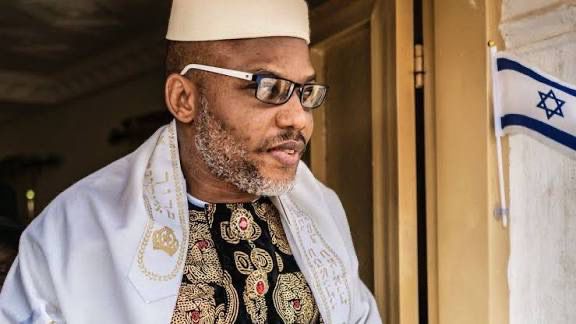
The Indigenous People of Biafra (IPOB) has issued a strongly worded statement condemning comments attributed to presidential aide Sunday Dare regarding the legal situation of its leader, Nnamdi Kanu.
In the statement signed by IPOB spokesperson Emma Powerful, the group rejected comparisons between Kanu and Yoruba nation agitator Sunday Igboho, arguing that both men operate under different circumstances and motivations.
IPOB Rejects Comparison
IPOB described the comparison as “misleading,” maintaining that Kanu’s actions are rooted in what it called a struggle for self-determination for the proposed state of Biafra. The group insisted that historical context and political grievances must be considered when assessing his prosecution
The statement also alleged bias in the handling of Kanu’s case, claiming that his conviction was shaped by political considerations under the administration of President Bola Tinubu.
As of press time, the Presidency had not issued an official response to IPOB’s latest claims.
Historical Parallels Cited
In defending its position, IPOB drew parallels with several historical figures it said were criminalised during their struggles but later recognised globally for their roles in political change. Among those referenced were:
Obafemi Awolowo, who was convicted of treasonable felony in 1963.
Nelson Mandela, imprisoned for 27 years during apartheid.
Mahatma Gandhi, prosecuted multiple times for sedition under British rule.
Martin Luther King Jr., jailed during the American civil rights movement.
Malcolm X, who served prison time before emerging as a prominent Black nationalist voice.
Nnamdi Azikiwe, who faced colonial-era legal challenges.
Kwame Nkrumah, imprisoned during Ghana’s independence struggle.
Julius Nyerere, who also encountered colonial legal sanctions.
IPOB argued that such precedents demonstrate how political actors can be judged differently over time, though critics maintain that each case must be assessed within its own legal and historical framework.
Security Claims and Regional Tensions
The group further defended the establishment of its Eastern Security Network (ESN), saying it was created to address insecurity in the South-East. IPOB asserted that the initiative was a response to threats it believed were not adequately handled by federal authorities.
Security analysts, however, have previously expressed concern over the proliferation of non-state armed groups across Nigeria, warning that parallel security structures could escalate tensions.
Ongoing Debate
Kanu’s detention and trial remain among the most polarising political and legal issues in Nigeria, drawing reactions from supporters who frame his actions as self-determination advocacy and critics who argue that national security and constitutional order must be upheld.
The latest exchange underscores the continuing divisions over separatist agitation, federal authority, and the interpretation of historical struggles within Nigeria’s contemporary political landscape.
