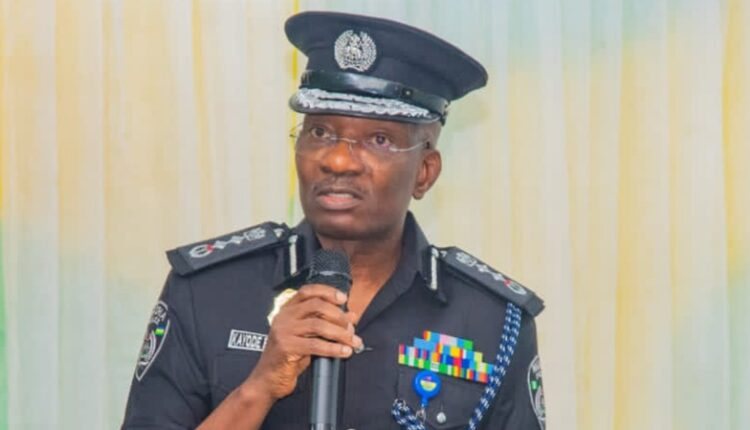
President Bola Tinubu has removed Kayode Egbetokun from his position as Inspector-General of Police, bringing an abrupt end to a tenure that was dogged by controversy and internal tensions within the Nigeria Police Force.
Multiple senior police officials and sources within the Police Service Commission confirmed on Tuesday that the President directed Egbetokun to prepare his handover notes after a meeting at the Presidential Villa. He is expected to hand over to Tunji Disu, the Assistant Inspector-General of Police in charge of the Force Criminal Investigation Department (FCID) Annex in Alagbon, Lagos.
One senior source disclosed that Egbetokun was informed of his removal during a visit to the Villa and instructed to conclude transition arrangements immediately. According to the source, the President advised him to step aside and focus on his health, citing reported kidney-related medical issues.
Egbetokun’s removal reportedly triggered mixed reactions within the police hierarchy, with some officers said to have welcomed the development. Sources also indicated that there were differing views within the Presidency over his continued stay in office, but President Tinubu ultimately insisted on the change in leadership.
Tenure Marked by Controversy
Egbetokun’s time as IGP was overshadowed by persistent public scrutiny and allegations of misconduct. Central among the controversies was the extension of his tenure beyond the statutory retirement age of 60 years or 35 years of service, a move that drew criticism from civil society groups and legal experts who argued it contravened established police service rules.
Questions were also raised over alleged preferential promotions within the Force. Reports had alleged that a senior officer serving in his office received accelerated advancements under circumstances critics described as irregular. The claims fueled accusations of favoritism and eroded confidence in the leadership of the Force.
Further controversy emerged following reports that funds from a state security vote were allegedly traced to a bank account linked to a member of Egbetokun’s family. The allegations sparked public debate and calls for an independent probe into the handling of security funds. However, rather than a transparent investigation, the matter escalated into a series of legal actions.
Legal Battles and Press Freedom Concerns
During his tenure, Egbetokun initiated multiple lawsuits against activist Omoyele Sowore and the online news platform SaharaReporters over publications describing him as an “illegal IGP” and detailing alleged financial improprieties.
The dispute resulted in court injunctions restraining further publications concerning Egbetokun and members of his family. Critics argued that the legal actions reflected a broader attempt to stifle dissent and suppress investigative reporting, rather than addressing the substance of the allegations through open inquiry.
Observers noted that the repeated recourse to litigation deepened perceptions of an embattled police chief relying on institutional power to defend his position amid mounting criticism.
Transition in Leadership
With Egbetokun’s exit, attention now turns to Tunji Disu, who is expected to assume leadership of the Nigeria Police Force. Disu, who currently oversees the FCID Annex in Lagos, steps into the role at a time when the Force faces calls for reform, improved accountability, and restoration of public trust.
The Presidency has yet to issue an official statement detailing the reasons for the leadership change, but the development marks a significant shift in Nigeria’s security architecture as the administration recalibrates its approach to policing and internal security management