

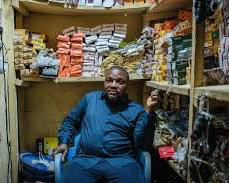
The leadership of Ohanaeze Ndigbo has strongly criticised The New York Times over a recent report that allegedly linked an Igbo man to a United States military airstrike in Sokoto State.
The Igbo socio-cultural organisation described the report as dangerous, misleading, and capable of stoking ethnic tension, warning that such narratives echo historical propaganda that once led to widespread violence against the Igbo people.
In a statement issued on Tuesday, January 20, the Deputy President-General of Ohanaeze Ndigbo, Okechukwu Isiguzoro, alongside the group’s National Spokesman, Chinyereze Ohia, condemned the article, which reportedly claimed that Emeka Umeagbalasi, an Onitsha-based trader, influenced former U.S. President Donald Trump’s decision to authorise airstrikes on a village in Sokoto on December 26.
According to Ohanaeze, the publication represents a misrepresentation of facts and appears to be connected to controversy surrounding the Federal Government of Nigeria’s $9 million lobbying deal.
‘Igbo People Have No Role in US Intelligence Operations’
The group categorically denied any suggestion that Igbo individuals have ever served as intelligence informants or collaborators in U.S. military operations against terrorist groups in Nigeria.
Ohanaeze described the implication that an Igbo man provided intelligence leading to U.S. airstrikes as not only false but deeply unfair and provocative.
“The Igbo people, particularly those from the Southeast, have neither been involved nor participated in any capacity as intelligence providers in the United States’ counterterrorism operations in Nigeria,” the statement said.
Warning of Historical Parallels
Ohanaeze expressed grave concern over what it described as disturbing historical parallels, noting that similar narratives in the past were used to justify violence against the Igbo.
“Our concerns are deeply rooted in historical precedent. The New York Times article, which attempts to portray an Igbo individual allegedly a ‘screwdriver seller’ from Onitsha as a key intelligence source for U.S. airstrikes, mirrors the propaganda that fuelled ethnic tensions ahead of the tragic 1966 pogrom against the Igbo,” the group stated.
The organisation described the article as “far-fetched” and accused it of being crafted to incite suspicion, tribal animosity, and hostility toward Igbo communities, particularly those living in Northern Nigeria.
Ohanaeze also noted that the report was supported by a Nigerian freelance photographer, Taiwo Aina, a detail it said raised further concerns about local complicity in spreading what it termed a harmful narrative.
Accusations of Scapegoating
Describing the portrayal of an Onitsha-based trader as a critical intelligence asset as “ludicrous and insulting,” Ohanaeze accused the publication of attempting to revive long-standing patterns of scapegoating the Igbo for Nigeria’s challenges.
The haunting memories of the 1966 anti-Igbo pogrom remain etched in our collective consciousness,” the statement continued.
The group recalled how international media coverage once falsely labelled the January 15, 1966 coup as an “Igbo coup,” a narrative that contributed to the July 1966 counter-coup and the subsequent mass killings of Igbo people
According to Ohanaeze, the New York Times article appears to be treading a similarly dangerous path by repeatedly and unfairly linking the Igbo to Nigeria’s security and political crises.
Demand for Apology and Retraction
On behalf of the Igbo people, Ohanaeze demanded an immediate and unconditional apology from The New York Times and called for a full retraction of the report.
The group warned that it would hold the publication responsible for any escalation of ethnic tension or unrest that may arise as a result of the article, especially in Northern Nigeria.
Ohanaeze also urged Igbo civil rights organisations and individuals to exercise caution when commenting on sensitive security matters involving U.S.–Nigeria counterterrorism cooperation, warning that such discussions could be misinterpreted or exploited to justify further misinformation.
