

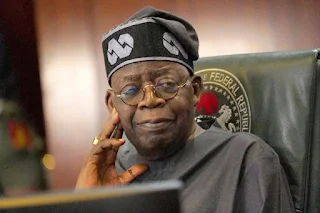
Bola Ahmed Tinubu addressed a rally in Ilorin and declared what many Nigerians felt about the government of the day: _“In any civilized country, Jonathan should have resigned… They have exhibited failure, lack of capacity, vision, creativity.”_ His argument was clear. A president who cannot protect his people has lost the moral right to lead. He was right then. By the very standard he set, he has failed now. Tinubu demanded Goodluck Jonathan’s resignation over Boko Haram and the Chibok abductions. Today, the killings have not stopped. In some ways, they have worsened. Between November 2024 and April 2025, Boko Haram and ISWAP carried out 252 coordinated attacks across Borno State alone. Over 200 civilians were killed and three local government areas were seized. On November 18, 2025, Brigadier General Musa Uba was killed in an ISWAP ambush. In January 2025, 28 soldiers, including a Lieutenant Colonel, were killed in two separate attacks in Malam-Fatori and Borno. Abductions, the very crime Tinubu used to indict Jonathan in 2014, continue. In November 2025, 25 schoolgirls were kidnapped in Kebbi State. That same month, over 300 students and staff of a Catholic school in Niger State were abducted in one of the largest mass kidnappings since Chibok. The Tinubu administration points to air strikes, with the Air Force claiming 592 militia killed in eight months. But bombing bandits is not the same as securing Nigerians. Analysts at SBM Intelligence note that Boko Haram factions have launched their most successful attacks since late 2024. In 2014, Tinubu told Jonathan that excuses about “saboteurs in the military” meant “you are admitting failure… resign.” Today, former Vice President Atiku Abubakar, the PDP, and groups of former lawmakers have turned his words back on him: _“The security of the lives of our people is your primary responsibility. Live up to it or be humble enough to admit incompetence and resign.”_ He set the standard. He has not met it. On May 29, 2023, President Tinubu announced the removal of fuel subsidy. Nigerians were told the era of reckless borrowing to fund consumption was over. The opposite happened. Nigeria’s public debt stood at ₦159.28 trillion as of December 2025, a ₦14.61 trillion increase in just one year. That translates to ₦66,250 owed by every Nigerian. In July 2025, the Senate approved a $21.5 billion external borrowing plan for the Tinubu administration, alongside €2.2 billion, ¥15 billion, and a $2 billion domestic bond. In April 2026, the President sought another $516 million loan for the Sokoto-Badagry Superhighway. Former Central Bank Governor Sanusi Lamido Sanusi captured the contradiction in April 2026: _“We’ve removed the subsidy… If you’re not paying the subsidy and you’ve got the money, why are we still borrowing and borrowing? What are we borrowing for?”_ Subsidy was removed because it allegedly consumed 100 percent of revenue. If the drain is gone, where is the money? Why is debt service still swallowing revenue while fresh loans pile up? With total debt projected to cross ₦200 trillion by the end of 2025, Nigeria is mortgaging the future to pay for today’s mismanagement. The government promised that subsidy removal would free resources for Nigerians. Instead, poverty has deepened. The World Bank’s April 2026 Nigeria Development Update reports that 139 million Nigerians now live in poverty, up from 87 million in 2018. The national poverty rate climbed from 56 percent in 2023 to 61 percent in 2024 and 63 percent in 2025. That is 140 million citizens. A University of Abuja study presented at an Agora Policy dialogue in Abuja found that poverty jumped from roughly 50 percent to 63 percent immediately after subsidy removal. Low-income households “bore the brunt,” with the poverty gap widening from 31.6 percent to over 45 percent. Yes, headline inflation fell from 34.80 percent in December 2024 to 15.15 percent in December 2025. Food inflation dropped from 39.84 percent to 10.84 percent. But as the World Bank notes, _“Household incomes have not grown fast enough to offset still-elevated inflation, and poverty has yet to begin declining.”_ Prices are still rising, just more slowly, after subsidy removal caused a 73.8 percent increase in the cost of living. Meanwhile, government revenue has soared. Monthly federal revenue rose from ₦711 billion in May 2023 to ₦3.635 trillion in September 2025 — a 411 percent jump. Yet the World Bank says “many households are still struggling with eroded purchasing power.” Revenue boom for government, hardship bust for the people. Tinubu’s 2014 indictment of Jonathan rested on three pillars: insecurity, economic hardship, and broken trust. In 2025, each pillar has collapsed under him.2014 Charge Against Jonathan 2025 Reality Under TinubuCan’t stop Boko Haram, should resign 200+ civilians killed Nov-Apr 2025; Brigadier General killed; LGAs seized“Mis-governance and untold hardship” 63% poverty rate; 140m Nigerians poorBorrowing while failing Debt at ₦159.28trn; new $21.5bn loan approvedPresidential aide Daniel Bwala recently said Tinubu’s 2014 call for Jonathan to resign was “legitimate.” If it was legitimate then, it is legitimate now. Nigerians must reject Tinubu for the following reasons: 1. *He does not live by his own words.* He cannot demand accountability in opposition and evade it in power. 2. *We paid for subsidy removal twice.* First at the pump and in the market. Second through new debts that our children will repay. As Sanusi warned: _“You cannot remove wastages and continue borrowing.”_ 3. *The books are balanced, but people are broken.* ₦3.6 trillion monthly revenue has not translated to food on the table. Instead, 10 million more Nigerians fell into poverty in 2025 alone. 4. *Leadership is responsibility, not excuses.* In 2014 Tinubu told Jonathan to “fish them out… no excuse of failure.” Today, Nigerians are told to endure “global shocks” while terrorists walk into schools and military bases. In 2014, Tinubu told Nigerians to “wait for our broom, we will sweep him away.” In 2027, the ballot is the broom. Nigeria cannot afford another four years of a government that campaigns against failure but governs with it. The President wrote the standard. The people must now apply it.
Charles Jaja.In April 2014,
