

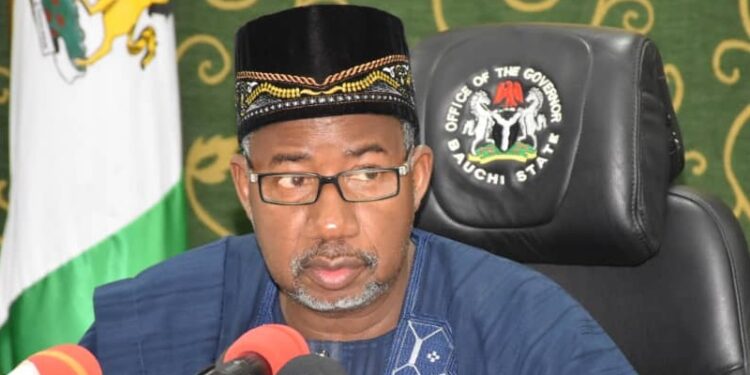
Governor Bala Mohammed of Bauchi State has issued a stern warning to the federal government over what he describes as the harassment and persecution of opposition politicians.
Speaking in a recent video address, the governor criticized federal agencies, including the Economic and Financial Crimes Commission (EFCC).
He accused the agencies of targeting individuals who do not align with the ruling party.
Allegations of Political Persecution
Governor Mohammed accused the Federal Government, led by Bola Ahmed Tinubu, of using state institutions to intimidate opposition members:
“The APC-led federal government thinks they can use the courts, the institution of governments like the EFCC to persecute and prosecute Nigerians that are not within their own party.”
He described these actions as politically motivated, warning that such practices threaten the democratic foundations of the country.
Strong Warning: “We Will Declare War”
The governor issued a strong ultimatum, indicating that opposition members will no longer remain silent in the face of perceived persecution:
“If they don’t stop, we are going to declare war. I assure you we are not going to keep quiet any longer.
We won’t allow anybody to criminalize me because I am not in their party.”
He emphasized his refusal to join the ruling party, stating unequivocally:
“And I refuse to join their party. And I will not join their party.”
Governor Mohammed’s remarks signal heightened tension between opposition politicians and the federal government.
This reflects growing concern over the use of state institutions for political leverage.
The statement comes amid increasing scrutiny of opposition figures across Nigeria, with critics accusing the federal government of selectively targeting politicians who challenge its authority.
The governor’s declaration highlights concern over political freedom, institutional impartiality, and the protection of dissenting voices in Nigeria’s democracy.
Implications for Nigerian Politics
Observers warn that the escalation of rhetoric could further polarize the political landscape, particularly as opposition leaders feel under siege.Politics
The warning from Governor Mohammed underscores the fragility of political tolerance.
It also raises questions about the impartiality of law enforcement and judicial institutions in politically sensitive cases.
Governor Bala Mohammed’s statement is a forceful reminder of Nigeria’s deepening political tensions.
It highlighted the delicate balance between governance, party politics, and democratic accountability.Politics
Opposition figures are, in the meantime, vocalizing resistance against perceived harassment.
The coming weeks may determine whether dialogue, legal action, or political confrontation will define the nation’s path forward.
