
 Ogona Anita
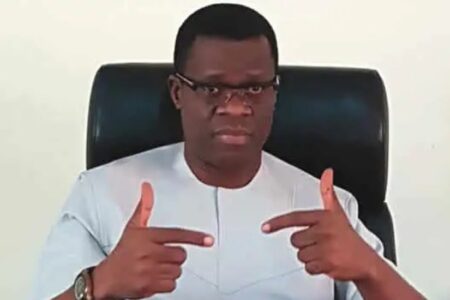
Former Resident Electoral Commissioner of the Independent National Electoral Commission (INEC), Mike Igini, has raised fresh concerns over the integrity of the 2027 general elections, warning that three controversial provisions in the 2026 Electoral Act could open the door to massive rigging and sabotage at the polling unit level.
Speaking on Arise TV’s Morning Show on Wednesday, Igini described Sections 63, 138 and 137 of the Electoral Act as “dangerous provisions” capable of undermining the credibility of the next general election if not urgently amended.
According to him, the provisions effectively weaken ballot security, shield electoral offenders, and make it easier for manipulated results to survive legal scrutiny.
“Today, one of these areas I found very shocking. I decided that, look, let me go through the Electoral Act, and I found that whereas the last intervention we had here, we were discussing Section 60, Subsection 3, I have now found a more dangerous three provisions,” Igini said.
He identified Section 63 as the most alarming, noting that it reintroduces a provision allowing presiding officers to accept ballot papers that do not bear INEC’s official manufacturer’s mark and security features.
“Section 63 has now reintroduced something very terrible,” he said. “A ballot paper that will be used for the 2027 election that does not bear the official security features of INEC may be accepted by the presiding officer.”
Igini explained that the implication is that presiding officers now have discretionary powers to validate suspicious ballot papers, a development he said could encourage politicians with access to INEC’s serial numbers and security patterns to print their own ballot papers.
“The presiding officer has now been given the discretion to accept ballot paper notwithstanding the absence of the official mark, and to count that ballot paper,” he warned.
“What that means is that before this election, politicians who now have access to the security features of INEC ballot, they are going to produce their own ballot papers. They are going to print their own ballot paper. This is dangerous.”
On Section 138, Igini said the provision creates what he called a “rigging shield” by protecting electoral officers who violate INEC’s own guidelines and instructions, as long as their actions do not directly contradict the Electoral Act itself.
“Section 138 has been one of the rigging provisions that we have cried out to be removed,” he said.
He quoted the section as stating that any act or omission contrary to the instruction or directive of INEC, but not contrary to the Electoral Act, “shall not of itself be a ground for questioning the election.”
“They are saying that a presiding officer, a collation officer, a returning officer can abandon INEC regulations and guidelines, and they provided immunity there,” Igini said. “When you want to deceive people, you put it in words.”
He further criticised Section 137, which he said makes it unnecessary to join presiding officers, returning officers and other electoral officers accused of misconduct in election petitions, even when they were directly responsible for the disputed documents or actions.
“It says that where there is a complaint about the conduct of an electoral officer, it shall not be necessary to join such officer,” he explained. “You are saying that the people who rig elections, presiding officers who were actually the makers of the documents, should not be brought before the tribunal.”
Igini recalled that reforms introduced in the 2022 Electoral Act had attempted to address the longstanding problem of “document dumping” in election tribunals by allowing certified INEC documents to stand as evidence without requiring oral testimony from unavailable officers.
However, he warned that the new provisions reverse that progress and expose the process to abuse.
“As we speak, these provisions that I have outlined, particularly at the level of the balloting, mean that the process has been sabotaged,” he said.
“To the extent that ballot papers can now be stuffed, people are going to produce their own ballot papers.”
Drawing from past experience, he cited cases from the 2019 elections where some officials allegedly leaked ballot serial numbers and security features to politicians in parts of the South-East and South-South.
“In one case in Imo State, INEC went to court to say that the result sheet was not our document, but guess what? The tribunal upheld a forged document,” he revealed.
He also expressed concern over the role of the judiciary, insisting that the courts must remain the final line of defence for democracy and electoral justice.
“The judiciary must be the last line of defence of democracy and the rule of law,” Igini said. “But that has not happened historically, and unfortunately, that remains my worry.”
The former commissioner urged Nigerians, legal practitioners and civil society groups to pay urgent attention to the controversial sections before the country heads into the 2027 election cycle, warning that failure to act could mean the process is already compromised before the first ballot is cast