
 Ogona Anita
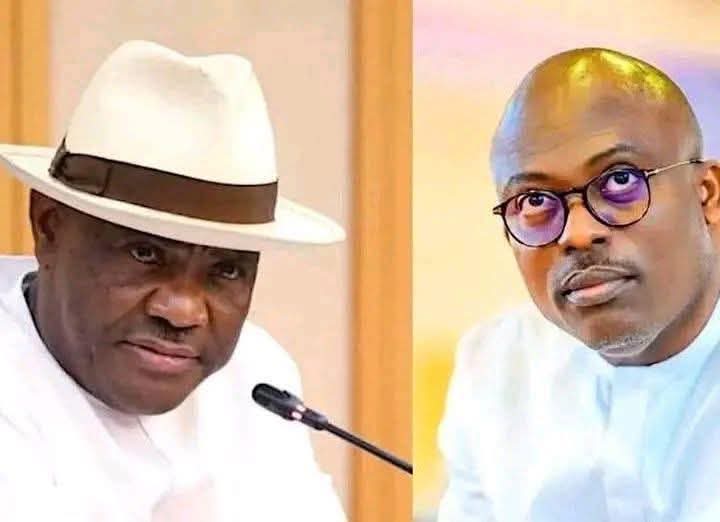
Fresh revelations have emerged around the prolonged political crisis rocking Rivers State, with insider accounts suggesting that fear of political extinction, power calculations ahead of 2027, and behind-the-scenes negotiations are at the heart of the escalating showdown between Governor Siminalayi Fubara and his estranged political godfather, Minister of the Federal Capital Territory (FCT), Nyesom Wike.
As impeachment threats against Governor Fubara and his deputy, Professor Ngozi Odu, continue to dominate the political landscape, strong indications now suggest that the bitter standoff may soon give way to a negotiated settlement, following the intervention of a high-powered peace committee led by former Attorney-General of the Federation, Chief Kanu Agabi (SAN).
Inside Sources: Fear, Survival and Political Bargaining
According to highly placed political sources familiar with the crisis, the impeachment push is less about alleged “gross misconduct” and more about political survival on multiple fronts.
“Wike is scared of his political career if Fubara wins a second term,” one insider disclosed. “He wants to return as a minister, and if Fubara secures another term while Wike loses his federal appointment, that could be the end of his influence. That is why he is using the Assembly as leverage to force negotiations.”
The source further revealed that the FCT Minister no longer enjoys the level of direct access to President Bola Tinubu that he once had, making the Rivers State House of Assembly his strongest bargaining chip in pressing demands tied to his political future.
On the other side of the divide, lawmakers in the state Assembly—many of whom are perceived as loyal to Wike—are also said to be acting out of fear of losing their seats in 2027.
“There is no real gross misconduct,” a key political player said. “What the lawmakers want is a clear assurance that they will get return tickets in the next elections. With the way things stand, they are not confident the governor will support them.”
Defection Fallout and Legislative Anxiety
Investigations indicate that tensions escalated sharply after Governor Fubara defected to the All Progressives Congress (APC) in December 2025. His move altered the political calculations in the state, especially among lawmakers who suddenly found themselves uncertain of their relevance in the new political order.
“Once Fubara moved to the APC, it became clear that he would likely enjoy an automatic ticket for a second term,” a source explained. “For lawmakers without guarantees, that was a red flag. Politically, they felt exposed.”
This anxiety reportedly fueled renewed impeachment threats, despite earlier indications that some legislators were open to a political solution.
Agabi Peace Committee Steps In
Against this backdrop, the intervention of the Pan Niger Delta Elders Forum (PANDEF) has injected a fresh dose of optimism into the volatile situation. PANDEF recently constituted a seven-man peace and reconciliation committee chaired by Chief Kanu Agabi, widely respected across political divides in the Niger Delta.
The committee began its work last week in Abuja, first meeting with Minister Wike on Thursday before holding a three-hour closed-door session with Governor Fubara in Port Harcourt on Friday. It also engaged the Chairman of the Rivers State Elders Council, Chief Ferdinand Anabraba, and other key elders and political leaders aligned with both camps.
“So far, the meetings have been very fruitful,” a source close to the talks told reporters. “Before now, there were public statements and heated rhetoric, but what is happening now is encouraging. There is renewed hope.”
The committee is expected to submit its report within two weeks, with stakeholders expressing confidence that its recommendations could finally bring an end to the protracted impasse.
APC Weighs In, Warns of Legal and Political Fallout
Meanwhile, the Rivers State chapter of the APC has raised the alarm over what it described as a “choreographed legislative coup d’état,” urging the state’s Chief Judge, Justice Simeon Amadi, to obey a subsisting court order restraining him from acting on the impeachment request.
The Rivers State House of Assembly had announced on Friday that it had written to the Chief Judge to constitute a seven-man panel to probe allegations against the governor and his deputy. However, the APC insists that a state High Court injunction explicitly bars such action.action.
In a statement signed by its spokesman, Darlington Nwauju, the APC warned that the impeachment drive, if pursued, could severely damage the party’s standing in Rivers State.
“No matter how beautifully crafted the allegations are, they remain subjective in the court of public opinion,” the party said, describing the Assembly’s actions as reckless and politically dangerous.
The party further called on the APC national leadership to immediately activate internal disciplinary and conflict-resolution mechanisms under Article 21(b)(iii) of its constitution to prevent an embarrassing collapse of party cohesion in the state.
Ijaw Nation Rallies Behind Fubara
Adding a new dimension to the crisis, Ijaw leaders and youth groups have openly thrown their weight behind Governor Fubara, framing the impeachment threat as not just a political issue but an ethnic and regional concern.
President of the Ijaw Youth Council (IYC), Dr. Alaye Theophilus, confirmed that more than 50,000 Ijaw people of voting age from Ondo, Edo, Delta, Bayelsa and Akwa Ibom states have allegedly transferred their voting units to Rivers State in preparation for the 2027 governorship election.
“We are solidly with Fubara,” Theophilus declared. “He is an Ijaw man, and nobody wants to take chances. Fubara must complete his second term.”
Similarly, President of the Ijaw National Council (INC), Professor Benjamin Okaba, warned that impeaching Fubara would be viewed as a betrayal of the Ijaw nation.
“If this happens, it will not be good for democracy,” Okaba said, calling on the APC leadership to protect the governor. “Why should Fubara be treated differently?”
A Crisis Years in the Making
The Wike–Fubara feud dates back to shortly after the 2023 governorship election, when relations between the two men—once close allies—began to deteriorate over disagreements on political control, legislative loyalty and the implementation of pre-election agreements.
Since then, Rivers State has witnessed repeated impeachment threats, court battles, and legislative paralysis, with governance often taking a back seat to political warfare.
In March 2025, President Bola Tinubu took the unprecedented step of declaring a state of emergency in Rivers State, suspending the governor, his deputy and the Assembly for six months and appointing a sole administrator. Although democratic governance was restored in September 2025, tensions have continued to resurface, culminating in the current crisis.
Waiting for a Breakthrough
As the Agabi Peace Committee continues its work, political observers say the coming days will be critical in determining whether Rivers State finally turns the corner or slides deeper into instability.
For now, with negotiations underway, court orders in place, and regional sentiments running high, the fate of Governor Fubara’s administration—and the political future of Nyesom Wike—hangs delicately in the balance.