 Ogona Anita

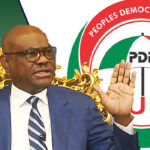
The Minister of the Federal Capital Territory (FCT), Nyesom Wike, on Friday, accused the Rivers State Government of deliberately denying him access to the Yakubu Gowon Stadium in Elekahia, Port Harcourt.
Wike, a former governor of Rivers State and a central figure in the state’s ongoing political rift, issued a stern warning to the administration of Governor Siminalayi Fubara, declaring that any future refusal to grant him access to the stadium could be met with forceful resistance.
Speaking on January 30, 2026, during the inauguration of coordinators of the Rivers State chapter of the Renewed Hope Ambassadors at Elechi Amadi Polytechnic, Port Harcourt, Wike expressed anger over what he termed the unjustified rejection of his request to use the stadium for a political gathering.
Advertisements
“We applied to the Rivers State Government to use the General Yakubu Gowon Stadium, and they refused us,” Wike said. “Next time we apply and they don’t approve it, we will break in by force.”
The comment, delivered to a cheering crowd of supporters, immediately sparked controversy and renewed debate over the deepening political crisis in Rivers State, which has persisted since the fallout between Wike and his successor, Governor Fubara.
Rivers Government Yet to Respond Officially
As of the time of filing this report, the Rivers State Government has not issued a detailed official response addressing Wike’s claims or his threat. However, senior government sources insist that access to state-owned facilities, including the Yakubu Gowon Stadium, follows established procedures and is subject to security, scheduling, and administrative considerations.
A government official who spoke on condition of anonymity said the denial was “purely administrative” and not targeted at any individual.
The stadium is a public facility, but its use must align with state regulations and security advisories,” the source said. “This attempt to politicise routine administrative decisions is unfortunate.”
A Symbolic Venue in a Political Power Struggle
The Yakubu Gowon Stadium in Elekahia is one of the most prominent public venues in Rivers State and has historically hosted major political rallies, cultural events, and sporting activities. Denial of access to such a symbolic location has been interpreted by Wike’s supporters as a deliberate attempt to sideline him politically within the state he once governed.
For critics of the FCT minister, however, his remarks raised concerns about the rule of law and respect for public institutions.
Civil society groups and political analysts have cautioned that threatening to “break in by force” sets a dangerous precedent, particularly coming from a former governor and a serving cabinet minister.
Background to the Rivers Political Crisis
The standoff is the latest episode in the prolonged political feud between Wike and Governor Fubara. Although Fubara emerged as governor with Wike’s backing, relations between both men deteriorated rapidly over control of the state’s political structure, appointments, and the Rivers State House of Assembly.
The crisis has led to repeated interventions by national political figures, including President Bola Tinubu, and has resulted in parallel power blocs within the state’s political landscape.
Wike, now a key figure in the federal government, remains deeply influential in Rivers politics, while Governor Fubara has worked to consolidate his authority and distance his administration from his predecessor.
Security and Legal Concerns Raised
Legal experts have warned that Wike’s comments could have serious implications if acted upon. According to constitutional lawyer Abdulrahman Musa, access to public infrastructure must follow due process, regardless of political standing.
“No individual, no matter how influential, has the legal right to threaten forceful entry into a government facility,” Musa said. “Such statements, if carried out, could amount to incitement and a breach of public order.”
Security analysts also cautioned that political gatherings at sensitive times require careful coordination to prevent violence.
“Given the volatile nature of Rivers politics at the moment, authorities may be exercising caution,” said security consultant Onyekachi Eze. “That does not automatically translate to persecution.”
Supporters Rally Behind Wike
Despite the controversy, Wike’s supporters at the event hailed his comments as a bold stand against what they perceive as political intimidation. Many attendees accused the state government of selectively granting access to facilities based on political loyalty.
“This is our stadium too,” said one supporter. “You cannot use state power to silence opposition.”
The Renewed Hope Ambassadors, a pro-Tinubu political support group, used the inauguration to reaffirm their loyalty to the ruling All Progressives Congress (APC) at the federal level, even as Rivers State remains governed by the Peoples Democratic Party (PDP).
A Test for Democratic Institutions
Observers say the stadium dispute, though seemingly minor, reflects a larger struggle over power, influence, and democratic norms in Rivers State.
“The real issue here is not the stadium,” said political analyst Blessing Tamuno. “It is about who controls the political space in Rivers State and how far institutions can remain neutral amid intense personal rivalries.”
She warned that escalating rhetoric could further polarize the state and distract from governance and development.
What Next?
Whether the Rivers State Government will reconsider its decision or formally address Wike’s threat remains unclear. What is evident, however, is that the political cold war between Wike and Fubara shows no signs of easing.
“