 Ogona Anita
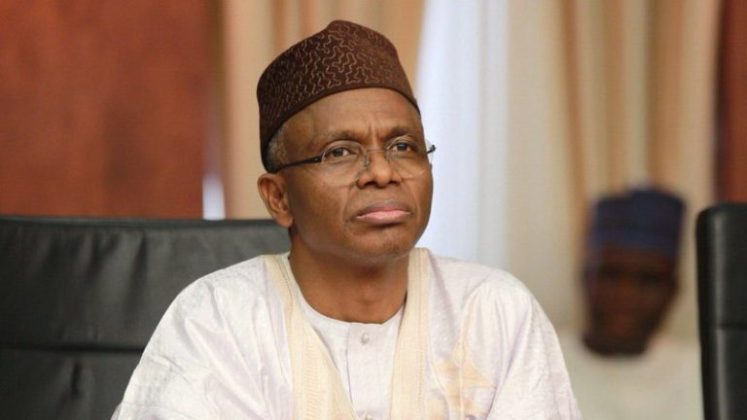
El-Rufai, who governed Kaduna State from 2015 to 2023, had earlier honoured an invitation by the anti-graft agency for questioning over allegations linked to his administration’s financial dealings
The detention of former Kaduna State Governor, Nasir El-Rufai, has been extended by the Economic and Financial Crimes Commission (EFCC) as investigations into alleged financial irregularities amounting to ₦432 billion continue to unfold.
The development has sparked widespread public and political interest, with his legal team intensifying efforts to secure his release on bail.
El-Rufai, who governed Kaduna State from 2015 to 2023, had earlier honoured an invitation by the anti-graft agency for questioning over allegations linked to his administration’s financial dealings. What initially appeared to be a routine investigative session has now evolved into a prolonged detention, following the EFCC’s decision to hold him beyond the standard 48-hour period typically permitted under Nigerian law.
Advertisements
Extended Detention Raises Legal Questions
Under the EFCC Act and Nigeria’s criminal procedure laws, the commission is empowered to detain suspects for up to 48 hours while conducting preliminary investigations. Where additional time is required, the agency must seek a court order to extend the remand period. In El-Rufai’s case, sources familiar with the matter indicate that the commission applied for and secured legal backing to continue holding the former governor as it reviews extensive financial documentation.
His legal team, however, has argued that the continued detention is unnecessary, maintaining that their client has fully cooperated with investigators and poses no flight risk. They have formally applied for bail, stressing that El-Rufai voluntarily responded to the EFCC’s invitation and has demonstrated readiness to assist in clarifying any issues under review
According to one member of the defence team, “Our client has nothing to hide. He has honoured every invitation and provided relevant documents as requested. We believe bail should be granted while the investigation continues.”
Recommended for you
“I Won’t Leave This Podium Until You Agree to Work With Me”…
Feb 17, 2026
BREAKING: EFCC Detains Former Kaduna Governor, El-Rufai, DSS…
Feb 17, 2026
BREAKING: FG Drags El-Rufai To Court for Hacking Into NSA…
Feb 16, 2026
Breakdown of the Allegations
The probe centers on allegations of financial mismanagement during El-Rufai’s eight-year tenure as governor. The claims were initially flagged by an ad hoc committee of the Kaduna State House of Assembly, which reportedly examined financial transactions, loans, and contract awards executed between 2015 and 2023.
The EFCC is said to be investigating three primary areas:
Unauthorized Loans and Guarantees:
Investigators are reviewing claims that certain loans and financial guarantees were secured without obtaining full legislative approval from the State House of Assembly. The commission is examining whether due process was followed in the borrowing arrangements and whether the funds were applied to approved projects.
Inflated Contracts and Procurement Concerns:
Another major focus of the probe involves allegations that several contracts awarded during the administration were inflated. The EFCC is reportedly scrutinizing procurement procedures, contractor selection processes, and payment schedules to determine whether any irregularities occurred.
Misappropriation and Financial Discrepancies:
Perhaps the most significant aspect of the investigation involves alleged discrepancies in state revenue and expenditure records totaling ₦432 billion. The commission is reviewing financial statements, budgetary allocations, and expenditure reports to verify the authenticity of the figures cited in the initial legislative report.
While these allegations remain under investigation, it is important to note that El-Rufai has not been formally charged or convicted in any court of law. The matter remains at the pre-charge stage, pending the outcome of the EFCC’s findings.
Political and Public Reactions
The development has generated considerable debate across political circles and civil society groups. Supporters of the former governor describe the investigation as politically motivated, arguing that El-Rufai’s outspoken views on national politics may have influenced the timing of the probe. Critics, however, insist that accountability should not be selective and that public office holders must be prepared to answer questions regarding their stewardship.
Legal analysts observing the case note that high-profile investigations often require extended periods of document review, especially when they involve large sums of public funds and multiple contractual arrangements.
“It is not unusual for financial crime investigations to take time,” a Lagos-based constitutional lawyer said. “What is critical is that due process is followed, and the rights of the suspect are respected throughout.”
EFCC’s Next Moves
The EFCC has remained measured in its public statements, emphasizing that the investigation is ongoing and that no conclusions have been reached. The commission has reiterated its commitment to transparency and accountability, stating that it will file formal charges only if sufficient evidence is established.
If investigators conclude that prosecutable offences were committed, the next step would involve filing charges before a competent court. At that stage, El-Rufai would formally enter a plea, and the matter would proceed through the judicial process.
Until then, the focus remains on whether the court will grant bail to the former governor while the investigation continues.
Legal Standards for Bail
Under Nigerian law, bail is generally granted unless there is clear evidence that the suspect may interfere with investigations, intimidate witnesses, or flee the country. Courts typically weigh factors such as the gravity of the allegations, the suspect’s health, prior criminal record, and demonstrated willingness to cooperate with law enforcement.
El-Rufai’s lawyers have argued that he meets the criteria for bail, noting that he voluntarily presented himself for questioning and has longstanding public ties within Nigeria.
The prosecution, however, may argue that the scale of the alleged financial irregularities necessitates caution, particularly if investigators believe that key evidence remains under review.
Broader Implications
The case represents one of the most high-profile corruption investigations involving a former state governor in recent times. With ₦432 billion reportedly under scrutiny, the outcome could have significant implications for public finance oversight and the enforcement of anti-corruption laws in Nigeria.
Political observers note that beyond the immediate legal questions, the case could shape public perceptions of accountability among former office holders. As Nigeria continues to grapple with concerns about transparency in governance, high-profile probes such as this often become symbolic tests of institutional independence.
For now, Nasir El-Rufai remains in EFCC custody pending the court’s decision on his bail application. The anti-graft agency continues to review documents and interview relevant individuals connected to the financial transactions under investigation.
As the nation watches closely, the coming days are expected to determine whether the former governor regains temporary freedom or remains in detention while the probe progresses. Regardless of the outcome, the case underscores the enduring tension between political power, legal scrutiny, and the pursuit of accountability in Nigeria’s democratic landscape.