 Ogona Anita
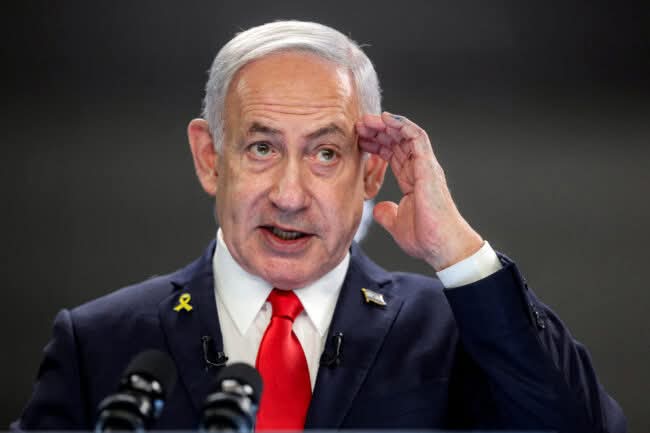
Israel is planning to support Nigeria’s efforts to address insecurity and protect vulnerable Christian communities through intelligence sharing and strategic cooperation, Israel’s Ambassador to Nigeria, Michael Freeman, has said.
Freeman said the plan, outlined by Israeli Prime Minister Benjamin Netanyahu, is anchored on partnership with the Nigerian government and respect for Nigeria’s sovereignty, stressing that Israel would only act within areas approved by Abuja.
“Our aim is to work with the Nigerian government, and the Prime Minister highlighted issues of intelligence sharing and other areas,” Freeman said on an Arise TV News interview.
“We will be led and guided by the Nigerian government as to where we can work and where we can partner.”
According to him, Israel’s proposed involvement is not limited to the protection of Christians alone but is aimed at tackling Nigeria’s broader insecurity challenges, including terrorism, insurgency, and violent extremism.
“This is very much about working with an ally, working with a partner, and doing things to tackle insecurity as a whole within the country,” the ambassador said.
Asked about Israel’s position should the United States, Israel’s key ally, decide to take unilateral action in Nigeria under President Donald Trump, Freeman declined to speculate, describing the scenario as hypothetical.
“Well, one, it’s a hypothetical situation, and two, I think there’s probably a better question to ask the American ambassador rather than the Israeli ambassador,” he said.
“In a hypothetical, we’d have to see what the situation was. I couldn’t tell you what our response would be.”
He reiterated that Israel’s consistent approach is to work directly with the Nigerian government.
“What I can tell you is that we want to work with the Nigerian government to see what we can do to help and work with them to tackle insecurity across the country,” Freeman said.
On whether there has been any diplomatic engagement with President Bola Tinubu’s administration following Netanyahu’s remarks, Freeman said any such discussions would remain confidential, particularly because they involve sensitive security matters.
“Any communication behind the scenes will obviously remain behind the scenes,” he said.
“Prime Minister Netanyahu has made our position clear, and anything that we can do in those areas, especially when you’re dealing with intelligence and information, is not something we’re going to talk about publicly because that would undermine the entire purpose.”
Freeman also responded to criticism that Netanyahu’s comments on protecting Christians abroad appear contradictory, given the ongoing conflict in Gaza.
He rejected the claim, insisting that the Prime Minister’s remarks were global in nature.
“I don’t think they are contradictory at all,” Freeman said. “What What Prime Minister Netanyahu spoke about was Christians across the world. It wasn’t only Christians in Nigeria.”
He said Netanyahu was highlighting Israel’s record on religious freedom, noting that Israel is the only country in the Middle East where the Christian population is growing and thriving.
“It is the only country in the Middle East where Christians have complete freedom of worship and freedom to do what they want,” Freeman said.
Describing Israel as an example of religious coexistence, Freeman said Christians in the country enjoy full rights and opportunities.
“If you look at Israeli society, Christians are the most well-educated. They are the wealthiest. But fundamentally, Christians have total freedom of religion,” he said.
He pointed to recent Christmas celebrations in Jerusalem as evidence of this freedom.
“During Christmas, we saw thousands of Christians in Jerusalem walking through the Via Dolorosa to the Church of the Holy Sepulchre.
“There were Christmas trees, Christmas lights, and Christians freely expressing their faith,” he said.
Freeman said he personally witnessed the celebrations, noting, “I was in Jerusalem on Christmas Eve and Christmas Day, and it was amazing to see Christians having a wonderful time, totally free to express their religion and identity.”
In recent years, the United States has repeatedly expressed concern over targeted attacks against Christian communities in Nigeria, particularly in the Middle Belt and parts of the North, where Boko Haram, Islamic State West Africa Province (ISWAP), armed bandits, and extremist elements have been blamed for killings, church burnings, and mass displacements.
Several U.S.-based Christian advocacy groups and lawmakers have described the violence as a “genocide” or “religious cleansing,” accusations the Nigerian government has consistently rejected, insisting the crisis is driven by terrorism, criminality, and resource-based communal conflicts rather than state-sanctioned religious persecution.
Under previous U.S. administrations, Nigeria was designated a “Country of Particular Concern” (CPC) for religious freedom violations, a move that triggered diplomatic tensions between Washington and Abuja.
Although the designation was later lifted, U.S. lawmakers have continued to push for tougher measures, including sanctions, arms restrictions, and enhanced monitoring of Nigeria’s security operations.
More recently, there have been renewed calls within U.S. political and evangelical circles for Washington to take stronger action to protect Nigerian Christians, ranging from intelligence cooperation and targeted sanctions to, in extreme proposals, direct security intervention.
These debates have gained momentum amid reports of mass killings, kidnappings of clergy and worshippers, and the destruction of Christian communities.
The Nigerian government has maintained that it welcomes international support but opposes any unilateral foreign action, arguing that such moves could undermine national sovereignty and complicate ongoing counterterrorism efforts.
It is against this backdrop of U.S. pressure, international advocacy, and Nigeria’s worsening security situation that Israel’s offer of intelligence cooperation, as outlined by Prime Minister Netanyahu and Ambassador Freeman, has drawn heightened attention.