
 adminreporter
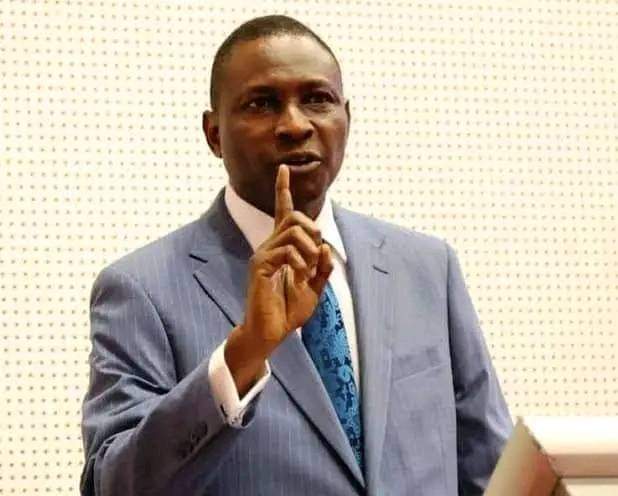
The Economic and Financial Crimes Commission (EFCC), Ola Olukoyede, said that the money stolen by civil servants in Nigeria far outweighed that by politicians.
Olukoyede, who spoke on the pervasive nature of corruption in Nigeria’s system, said civil servants played a significant role.
Olukoyede made the disclosure in an interview he shared on his X handle on Saturday.
He stated that most houses in Asokoro and Maitama areas in Abuja were owned by civil servants, suggesting widespread corruption in the civil service.
He said corruption was not limited to the public sector. According to him, the private sector was equally culpable.
He pointed out that in one notable case, the EFCC investigated a ministry and discovered N33.7 billion had been stolen.
Surprisingly, only N3 billion was traced to the Minister, while the remaining N30.7 billion was linked to civil servants, including directors of finance and procurement.
“This disparity highlights the significant role civil servants play in corruption, often more so than politicians.
“The gamut of money stolen by establishment people far exceeds what politicians have stolen,” Olukoyede stated.
“The EFCC’s findings underscore the need for a thorough examination of corruption in Nigeria, particularly within the civil service,” he said.
In the interview, the EFCC boss said: “There is no doubt that we have corruption in the public service, but I will tell you also that the private sector is as bad as the public sector from all the investigation work we have done.
“So, but coming to public service … we have discovered that it is extremely difficult for a political class to steal money without the connivance of – from our own point of work, we call them establishment people. They are always there; political appointees will come and go; these guys are always there, and I will give you a typical example.
“We investigated this particular ministry. The Minister then, we were prosecuting him: we discovered that about N33.7 billion was stolen only N3 billion we were able to trace to the Minister and the remaining N30.7 billion was traced to the director of finance, director of procurement, director of this and director of that, the establishment people.
“So when you look at the gamut of the money stolen by the establishment people, it is much more than what we the politicians have stolen and that’s the truth, Nigerians will realise that.”
Asked why they dud not tell Nigerians where they kept the money in Abuja, he said, “No if you trace money to people and they use it to buy house in their name and you discover the money in the accounts of their children and then their cronies, and in the cause of making statements they didn’t deny that the money belong to them, if they had mentioned the name of the Minister in the cause of making statement, we would have said okay they were just accessories, either two or after the facts.
“But when they owned up, you know the moment you catch them and you do your diligent investigation with – documentary evidence – it would be difficult for people to deny.
“Look statistics have shown because we carry out survey in the real estate in Abuja, most houses in Asokoro and Maitama are owned by civil servants.
“Yes, statistics have shown that we have evidence to prove that. We have discovered that and it’s important for us to beam our searchlight on the establishment people, on the core civil service sector – permanent secretaries, directors, and generally the civil servants.”
The EFCC’s investigation methods involve tracing money to individuals and identifying assets, such as real estate, that have been purchased with illicit funds.
According to him, in some cases, suspects had owned up to possessing stolen funds, providing valuable evidence for the commission’s cases.