
 Ogona Anita
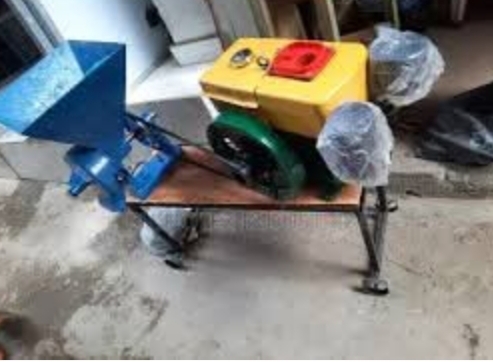
In this investigative report, IBRAHIM ADAM visited several markets across Lagos, buying small quantities of fresh pepper that were ground using the familiar local metal grinders relied upon daily to process pepper, tomatoes, grains, and other staples. When the samples were later subjected to laboratory analysis at a federal facility, the results raised alarm. They contained dangerously high levels of iron and zinc – metals that pose serious health risks, and when consumed over time, are linked to progressive organ damage
For years, Hadi Yusuf has lived in Lagos, so long that the city has become home, and he can no longer recall exactly when he migrated from Dala Local Government Area in Kano State.
Part of his safety routine over the past 10 years, he insisted, has been to carefully control the meals his family consumes. Yusuf explained that he had long cautioned his family against using locally produced metal grinding machines to process their food.
“I told my wife not to blend pepper outside with those machines for the past 10 years. Even when there is no electricity, I insist she put on the generator to blend anything because I need to protect my family,” he told Saturday PUNCH.
His fears, he said, stem from the lack of transparency regarding what local machines may have processed previously and how well they are maintained.
“I don’t know what they have used the machine to grind before our pepper. I don’t know what kind of water they use or what sticks they use to crush whatever they put into the machine,” he said, looking disgusted.
Another Lagos resident, Sani Shuaib, said his concerns were validated the day he returned from work to find a bowl of ground beans his wife had just processed using a street vendor.
“What drew my attention were the black particles on the surface. I had to follow my wife to the vendor’s shop, and the woman told us they were small pieces of dirt from the machine. That was the day I became even more worried,” he told Saturday PUNCH.
The discovery unsettled him deeply, prompting immediate action.
“I told my wife never to go to the street again to grind anything. The following day, I bought three different blenders for different purposes,” he said.
Scary experience
For Roberta Edu-Oyedokun, founder and Chief Executive Officer of Moppet Foods, the idea that a routine laboratory test could mark a terrifying turning point in her entrepreneurial journey had never crossed her mind.
She had poured her heart into developing a peanut-based cereal and proudly watched as families embraced her product. As demand grew, she scaled up production, relying on a locally made grinder recommended by an expert, unaware that the machine was silently contaminating the cereal.
When her product was subjected to a random test, the results revealed dangerously high levels of iron filings, an alarming discovery for food intended to nourish children and families.
Edu-Oyedokun shared her experience on Facebook, describing how devastating it was to realise that something meant to promote health could instead cause harm.
The contamination was traced to the grinder, which was shedding metal during operation.
“We had invested over N400,000 in its fabrication, but we had no choice. We discarded it immediately,” she said. Once she switched back to a basic kitchen blender, the contamination disappeared.
The ordeal also opened her eyes to a broader problem affecting millions of Nigerians daily without their knowledge.
“The woman grinding tomatoes on the street serves more people daily than many factories, yet she is left unregulated, unprotected, and uninformed,” she said.
The entrepreneur warned that exposure to heavy metals can lead to kidney and liver damage, heart disease, neurological disorders, and even cancer, with children and pregnant women particularly vulnerable.
What troubles Edu-Oyedokun even more is seeing government empowerment schemes distribute these same machines to communities.
“Please stop distributing this type of grinding machine in the name of empowerment. They are not food-grade. Painting them blue will not remove the risk,” she pleaded.
Edu-Oyedokun believes many Nigerians would be shocked if they tested the food processed in these grinders.
“If you carry the tomatoes you grind from this machine to any food laboratory for testing, you will cry,” she said.
Resilient vendor
At 53, Iya Lisa stands as a quiet pillar of resilience in Idi Araba, Mushin, Lagos State, where grinding pepper, maize, yam, and rice has become both her livelihood and legacy.
Our correspondent found her in a small corner of the bustling community, largely surrounded by Hausa residents who have come to regard her as an integral member of the neighbourhood. The constant roar of her four diesel-powered metal grinders cuts sharply through the air, a noise so insistent that even the heaviest sleeper would stir.
The small gutter in front of her shop tells a harsh story, its odour reminiscent of refuse left to rot for months. Yet people continue to queue, bowls and bags in hand, waiting their turn.
“I have been doing this work for over 25 years,” Iya Lisa said, smiling while recounting how she used her earnings to send two of her children to higher institutions. “I may not be educated, but my children must be,” she said.
When told that some people are wary of using fabricated grinding machines due to contamination risks, she emphasised that maintaining her machines’ cleanliness is non-negotiable.
According to her, engineers are called in to fix any faults or service the machines after prolonged use, while thorough cleaning is carried out after every grinding session to make sure particles from one product don’t contaminate another.
“My children clean the machines properly after each use. I grind pepper, jero, corn, maize, yam flour, and even rice for tuwo. Depending on what is being ground, customers pay as little as N300,” she said.
Iya Lisa added that none of her customers had ever raised concerns about the safety of her machines, confidently asserting that she was the most patronised grinder in the area.
Lack of awareness among vendors
Lamidi Agbaje, a 64-year-old grinding vendor who has spent more than four decades behind the whirr of metal machines, was taken aback when our correspondent suggested that the grinders could pose health risks.
“Everyone is talking about iron filings,” he said, shaking his head, “but what about the grease and oil we use to keep the machines running? What about the crushing sticks that wear down and shorten over time?” With a weary sigh, he added, “Only God will save us. Proper tests should be carried out.”
Mama Ngozi, a food seller at Olodi Apapa in Ajeromi-Ifelodun, told Saturday PUNCH that she has relied on manual grinders for more than 10 years without receiving a single health-related complaint from customers.
“I only use the grinders to prepare pepper for my meals, and people keep coming back because the food tastes good. I have not received any complaint since I started,” she said.
Heavy on metals
Researchers in Abia State found that food processed with locally fabricated metal grinders may contain potentially harmful levels of heavy metals, raising fresh concerns about the safety of widely used food-processing equipment.
A 2019 study titled Human Health Risk Assessment of Heavy Metals in Foodstuffs Processed with Diesel-Powered Metallic Disc Grinders, conducted by J. C. Nnaji, B. I. Iweha, and I. Ogbuewu, revealed that iron levels detected in soybean, beans, maize, and bambara nut posed measurable health risks to residents of Umuahia.
“Foodstuffs processed with locally fabricated diesel-powered metallic disc grinders contain heavy metals. Public health authorities are urged to regulate these grinders and educate the populace on their health implications,” the researchers warned.
The study traced the contamination to ageing machine components such as bearings, brushes, and grinding chambers, as well as insecticides used during cultivation and residues from processing equipment, underscoring how both poor maintenance and weak regulation can silently compromise food safety.
The fears and experiences of residents like Hadi Yusuf and vendors such as Iya Lisa were not isolated concerns—they painted a troubling picture of everyday food safety in Lagos. Alarmed by their accounts, our correspondent embarked on a ground-level investigation across multiple markets and neighbourhoods in the city. From the bustling stalls of Olodi Apapa to the crowded lanes of Ikorodu, Ogba, Mushin, and Oshodi, he purchased small quantities of fresh pepper, observing firsthand how the familiar local metal grinders were used.
Driven by the realisation that what many Lagosians consume without thought could pose serious health risks, these market visits became the first step in a larger probe aimed at uncovering the hidden dangers lurking in ordinary kitchen staples. Each sample collected was a tangible reminder of the invisible threat metal contamination may pose, a threat that only laboratory testing could confirm.
Saturday PUNCH findings
On a busy street in Ogba, Ifako Ijaiye, 54-year-old Iya Kunle earns a living grinding pepper. Her grinding machine, worn by years of constant use, bears the scars of age: rust creeping through flaking paint, bare metal exposed to the elements. She operates from the front of a building, just metres away from an open gutter where dirt and waste collect.
A sample of pepper ground at her spot on December 12, 2025, and analysed at the D. K. Olukoya Central Research and Reference Laboratories, University of Lagos, Akoka, painted a disturbing picture.
The laboratory results showed iron and zinc levels far above established safety limits.
The pepper sample recorded 3,023.88 mg/kg of iron, more than 30 times the acceptable limit of 100 mg/kg, and sharply contrasted with the control sample’s 146.13 mg/kg. Zinc levels stood at 179.35 mg/kg, also well beyond recommended thresholds.
“Exposure to iron filings poses serious health risks, ranging from gastrointestinal upset to long-term organ damage. Excess iron acts as a pro-oxidant, damaging tissues and potentially leading to cancers, liver disease, or diabetes. High zinc levels can also cause abdominal pain and suppress immune response,” the laboratory analysis concluded.
Tests conducted on the other four samples collected from different markets revealed the same alarming trend: dangerously high levels of iron and zinc.
Each sample, like the first, contained metal concentrations far exceeding safety limits, underscoring that contamination is not an isolated case but a widespread issue in foods processed with local metal grinders.
“Dangerous to vital organs”
Medical experts have warned that excessive iron intake can cause digestive discomfort, bloating, and abdominal pain, and over time may lead to serious damage to vital organs such as the liver, heart, and pancreas.
They noted that elevated zinc levels are associated with abdominal pain and, with prolonged exposure, can weaken the immune system, reducing the body’s ability to fight infections.
A consultant at the Division of Paediatric Surgery, Department of Surgery, Usman Danfodiyo University Teaching Hospital, Sokoto State, Dr Yazeed Muhammad, warned that even short-term exposure to excessive iron through contaminated food or water can trigger nausea, vomiting, abdominal pain, and, in severe cases, organ damage.
Interpreting the laboratory findings, he explained that prolonged exposure could lead to hemochromatosis, a condition caused by iron overload that damages critical organs such as the liver, heart, and pancreas.
“Staining of water or clothing may be a visible sign of iron levels high enough to pose a health risk if consumed regularly,” Muhammad cautioned.
He also highlighted the dangers of elevated zinc levels.
“Acute ingestion of high zinc can cause nausea, vomiting, diarrhoea, and stomach cramps. Chronic exposure may interfere with the absorption of essential minerals such as copper and iron, leading to anaemia and weakened immunity,” Muhammad explained.
According to him, children and people with certain metabolic conditions are particularly vulnerable to heavy metal exposure.
He further explained that iron filings disrupt basic metabolic processes by damaging organs and impairing the body’s ability to utilise essential nutrients.
“Heavy metals affect the body in two major ways. First, they disrupt vital organs and glands, the heart, brain, kidneys, bones, and liver. They also displace essential minerals, preventing them from performing their biological roles. This process is known as hemosiderosis,” Muhammad said.
“With prolonged exposure, excessive accumulation of iron can progress to hemochromatosis, a severe iron overload that may ultimately result in organ failure.”
The medical expert added that contaminants in ground food often originate from the metal components of ageing grinding machines.
“Paints used on machine parts, bushings, bearings, grease, and grinding discs are common sources of metallic contamination during food processing, especially when machines are old or poorly maintained,” Muhammad warned.
‘Extremely high and life-threatening’
A Scientific Officer at the Kebbi State Ministry of Health, Basiru Abubakar, cautioned that exposure to heavy metals at extremely high concentrations poses grave and potentially fatal health risks.
Abubakar, who also works in the Department of Medical Laboratory at the General Hospital, Argungu, after analysing the laboratory results, described the iron concentration of 3,023.88 mg/kg as “extremely high” and capable of triggering long-term, life-threatening conditions.
“Exposure to heavy metals can lead to cancer, liver damage, and serious harm to other organs in the body,” he said.
According to him, the danger lies in the cumulative nature of heavy metals, which gradually build up in the body, often causing silent damage before symptoms appear.
“This test result showing 3,023.88 mg/kg is not small. It is extremely high. Imagine cooking with this every week for a year. The level of heavy metals in the body would accumulate significantly and begin to cause serious damage,” he warned.
Abubakar stressed that iron at such a concentration is neither normal nor safe for human consumption.
“A level of 3,023.88 mg/kg of iron is not safe. It qualifies as a heavy metal concentration and is harmful to health in every respect,” he said.
The scientific officer also cautioned that metal contamination is not limited to grinding machines alone, noting that compromised canned foods could also expose consumers to hidden dangers.
“Metals are not natural foods. When a can is damaged without our knowledge, heavy metals can leach into the food inside,” he explained.
Experts warn of severe health risks
A Professor of Health Promotion and Environmental Health Education at the University of Ilorin, Kwara State, Olukunmi Olaitan, warned that consuming food contaminated with iron filings poses serious physical and chemical dangers to millions of Nigerians.
He explained that metallic particles shed from worn grinding plates contaminate everyday staples such as pepper, beans, and maize, creating risks that go far beyond mere food impurity.
“The danger is both physical and toxicological. Iron filings and other metals introduced through local grinding machines can injure the digestive system and expose consumers to long-term health complications,” he said.
According to him, sharp metallic particles can cause cuts and irritation in the mouth and throat, as well as damage to the stomach and intestinal walls.
“In severe cases, continuous ingestion may lead to ulceration or even perforation of the intestine, which is life-threatening,” he said, noting that children, the elderly, and people with pre-existing digestive conditions are particularly vulnerable.
Beyond physical injury, Prof Olaitan warned of the toxicological burden imposed by metallic contamination.
“This is not nutritional iron. It is poorly absorbed, irritates the stomach, increases oxidative stress and contributes to excess iron accumulation. Nigerian studies have shown that these machines can shed manganese, chromium, nickel and zinc. Long-term exposure has been linked to liver and kidney damage, neurotoxicity and increased cancer risk, especially with chromium and nickel,” the don said.
He noted that chronic exposure is especially alarming because many households consume ground foods daily.
“Persistent gastrointestinal irritation, low-grade inflammation and metal accumulation in body tissues can occur. Children are particularly vulnerable because their organs are still developing and they absorb metals more easily,” Prof Olaitan explained.
He stressed that iron filings are dangerous not only because they can physically injure the digestive tract, but because they introduce toxic metals into the body and trigger oxidative stress capable of causing long-term organ damage.
“Consuming iron filings in food is dangerous, and the risk increases with daily exposure. This problem must no longer be ignored, especially because its consequences are severe for vulnerable populations,” the don warned.
Poor maintenance worsens contamination
A grinding vendor in Ikorodu, Lagos State, Alabi Tolulope, warned that poor maintenance of metal grinding machines significantly increases the risk of contamination.
“There are two grinding discs inside the machine, and over time, they wear out. When that happens, we remove them for refilling. Although the discs are of good quality, like all mechanical parts, they eventually deteriorate,” she said.
Tolulope explained that improper handling, including overloading the machine, worsens the problem.
“A careful vendor will never pour everything in at once. When the discs are worn out, iron filings usually come out towards the end of the grinding process. These filings come directly from the discs when they are not properly maintained,” she said.
The vendor also highlighted the role of grease in machine operation.
“We apply grease to the adjuster and bearings to keep the machine running smoothly. But if the machine is not properly maintained or handled hygienically, the grease can turn into black oil. When it is not changed regularly, it can leak and contaminate the food,” she warned.
Weak testing capacity raises concerns
Meanwhile, a senior researcher in a major laboratory in Lagos has raised serious concerns over Nigeria’s limited capacity for advanced scientific testing, warning that the country’s dependence on foreign laboratories for certain analyses undermines public confidence and national credibility.
The researcher, who requested anonymity due to the “sensitivity of the issue”, said many facilities across the country lack the modern equipment required for accurate and comprehensive food analysis.
“It reflects poorly on our nation that samples often have to be sent abroad for proper evaluation. How can we claim to be serious under such circumstances?” he queried.
The researcher said fear of reputational damage has made many laboratories reluctant to handle sensitive tests.
These concerns followed Saturday PUNCH’s attempts to conduct additional analyses on the samples collected.
Several laboratories declined to carry out the tests.
“This issue is highly sensitive, and most laboratories will be cautious. Even some fully accredited labs may refuse because of the delicate nature of the matter,” he said.
When contacted, the Institute of Public Affairs of Nigeria also provided a list of laboratories, but none agreed to conduct the tests.
Safe alternatives
The Chief Executive Officer of J. A. Sanni Technical Services, Owode Onirin Market, Lagos State, James Sanni, told Saturday PUNCH that his company manufactures only stainless steel grinding machines, which he claimed are approved by the National Agency for Food and Drug Administration and Control and designed to provide safe and affordable grinding solutions.
During a visit to his workshop, Sanni said the machines are produced not only to meet market demand but also with food safety in mind.
“We produce only stainless steel grinders, and they are NAFDAC-approved. We no longer manufacture iron grinders. Those were made many years ago, but we stopped long ago to improve safety and better serve our customers,” he said.
According to him, the pepper grinding machines are entirely stainless steel in construction.
“From the hopper to the lever, spring, cover and adjuster, everything is stainless. Inside the machine are two grinding discs that crush and grind the pepper,” he explained.
Sanni acknowledged that certain components require regular maintenance, particularly the grinding discs, bearings and rubber seals.
“The bearing close to the lever can develop faults over time, and the rubber seal also wears out. The rubber prevents water from leaking into the machine. The two grinding discs inside are made of carbon steel, and they are responsible for crushing the pepper. They do not contaminate the food. Once they weaken, we replace them completely,” he said.
He added that only the exterior parts of the machines are painted for finishing.
“We use silver-blue paint on the outer parts to cover welding areas and give the machine a polished look. We do not paint the inner parts because that is where food is processed. Before sale, the inner hopper is thoroughly cleaned,” he said.
Emphasising affordability, Sanni said many Nigerians could not afford automated grinding machines.
NAFDAC, FCCPC disown manual machines
However, NAFDAC has warned that it does not approve manual grinding machines, citing serious contamination risks associated with their use.
The agency’s Resident Media Consultant, Sayo Akintola, said manual grinders, particularly locally fabricated ones, expose consumers to iron filings and other harmful particles generated through friction.
“It is natural for particles to enter food during grinding. Once there is friction between two iron surfaces, erosion occurs little by little,” Akintola told Saturday PUNCH.
He said the risk increases as machines age.
“When a grinder becomes old, friction will inevitably introduce particles like iron into the food being processed. These iron filings may not be visible, but they continue to accumulate in the product,” Akintola said.
The media consultant stressed that NAFDAC’s regulatory framework requires full automation to minimise contamination.
“For NAFDAC, all production processes must be automated. That is why site inspection is critical for approval,” Akintola said.
He added that ignorance cannot excuse non-compliance.
“NAFDAC does not approve anything manual. There is nothing like ignorance in law. Our rules and regulations are clearly stated in our approval manual,” Akintola said.
The Federal Competition and Consumer Protection Commission also warned that it would take action against any product that poses risks to consumers.
The FCCPC Executive Vice Chairman and Chief Executive Officer, Tunji Bello, said the Commission does not license or certify locally fabricated manual grinding machines.
He explained that product certification and safety standards fall under the mandate of agencies such as NAFDAC and the Standards Organisation of Nigeria.
“This collaboration ensures that technical assessments, product standards and consumer protection measures are aligned,” he said.
Speaking through the FCCPC Director of Corporate Affairs, Ondaje Ijagu, Bello told Saturday PUNCH that the Commission would not hesitate to act where consumer safety is threatened.
He urged consumers to report any cases of contamination or unsafe practices.