 adminreporter
In a quiet but telling move towards stronger African cooperation, Nigeria and Angola have agreed to remove travel barriers for their top officials, a step that turns long-standing political solidarity into practical diplomacy.
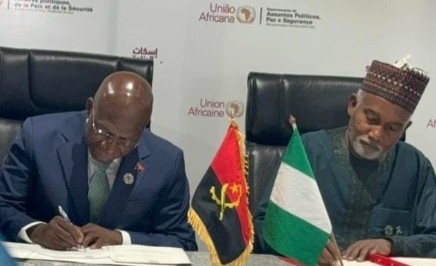
On 15 February 2026, the two countries signed a visa exemption agreement for holders of diplomatic and official/service passports on the sidelines of the 39th Ordinary Session of the African Union Heads of State and Government in Addis Ababa.
Nigeria’s delegation was led by the Minister of Foreign Affairs, Ambassador Yusuf Maitama Tuggar, while Angola was represented by its Minister of International Relations, Ambassador Tete Antonio.
Ambassador Tuggar described the agreement as long overdue, saying it would ease official travel, enhance diplomatic engagement and deepen institutional cooperation between the two “brotherly nations”.
He noted that visa-free movement for authorised government officials would facilitate smoother exchanges, joint initiatives and sustained dialogue without administrative bottlenecks. He also recalled the historic roots of Nigeria-Angola relations, tracing them to Nigeria’s principled support during Angola’s liberation struggle.
Tuggar referenced the landmark declaration by the late Head of State, General Murtala Muhammed, “Africa Has Come of Age” as a defining moment that underscored Nigeria’s solidarity with Angola and the broader African liberation movement.
In his remarks, Angola’s Foreign Minister, Ambassador Tete Antonio, expressed appreciation for Nigeria’s enduring support during the anti-colonial struggle, describing Nigeria’s leadership as pivotal in backing frontline states.
He said the newly signed agreement was a practical, forward-looking step that would consolidate decades of diplomatic ties while opening new avenues for closer cooperation.
Diplomatic sources say the visa exemption pact will help modernise Nigeria-Angola relations by removing bureaucratic hurdles to official engagement, strengthening policy coordination, and translating historic goodwill into more effective collaboration between institutions in both countries.