 Ogona Anita
The National Judicial Council has raised concerns about a proposal by the House of Representatives to empower the Nigerian Bar Association to sanction and remove corrupt judges.
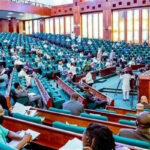
On March 25, 2025, the House of Representatives passed a bill seeking to amend the 1999 Constitution by introducing provisions for the removal of corrupt judges from the judiciary.
The bill proposes that the NBA should receive petitions against such judicial officers, consider the defense of the petitioned officer, and take further steps on the matter.
Reacting to the bill, the Deputy Director of Information of the NJC, Kemi Ogedengbe, questioned the feasibility and legality of such a move, citing constitutional constraints and procedural requirements.
In an interview with Sunday PUNCH, Ogedengbe said the Constitution placed the responsibility of disciplining judges squarely in the hands of the NJC.
She emphasised that sanctioning a judge is a process governed by specific procedures, including presenting evidence against accused judges.
“The constitutional requirements place the discipline of judges in the hands of the NJC, and it doesn’t just come with the NJC—it has procedures that must be followed. If a judge is deemed to be corrupt, you can’t just put up a statement that a judge is corrupt. It must be backed up with evidence.”
“Either the judge is caught in the act or you have evidence against the judge. Once it happens that way, the dictates of the Constitution will now be followed to deal with such a corrupt judge. That’s what the Constitution says,” she said.
Ogedengbe further questioned the practicality of the NBA taking on such responsibilities, and the potential for abuse.
She said, “The question is, who are those corrupting the judges? A crime does not occur in isolation; there are always accessories. Who are these accessories? Are they members of the public, lawyers, or medical doctors? Or are they lawyers themselves?”
The council also emphasised that public hearings and stakeholder input would play a critical role in determining the viability of the proposed amendment.
“The House of Representatives’ bill will not just end there; it will pass through the Senate and the 36 state Houses of Assembly. They are going to ratify it; there will be public hearings on it. So, this is just the tip of the Iceberg.
“Whether it will be able to curb corruption is what I don’t know because one person cannot perpetuate corrupt practices. There must be accessories. So, who are those accessories? Or will a judge just sit down, and they will charge him for corruption?”
“It is those accessories that we have to identify. From there, we will now know if the NBA taking over sanctioning judges will be abused or not.”
“This is just the beginning of the conversation. Whether this bill can effectively curb corruption remains to be seen. For now, we must adhere to the Constitution, which already provides a framework for disciplining judicial officers through due process.
“There is no constitutional amendment that does not involve public hearings. Every stakeholder will come to say if they support it or not. That is when we will know if this type of amendment will succeed or not. A law is not a good law until it is made perfect,” she said.
Source:Sunday PUNCH