
 Ogona Anita
The Nigerian film industry, popularly known as Nollywood, is now contributing over N2 trillion to the nation’s Gross Domestic Product (GDP), placing it on a competitive footing with the oil sector.
This was the central revelation at the 20th Professorial Inaugural Lecture of Prof. Ayodele Babatunde Joseph, delivered on Thursday at the 1,000-seater auditorium of Kaduna State University (KASU).
Delivering the lecture titled “Frame by Frame: Tracking the Trajectory of Complex Themes in Nigerian Film Culture,” Prof. Joseph presented a comprehensive analysis of the industry over the last two decades. He examined themes ranging from culture and gender to technology and economic impact, concluding that the sector has evolved beyond mere entertainment.
According to the Professor, statistics from 2025/2026 show the industry’s contribution to the national economy has surged past the N2 trillion mark, significantly boosting the GDP and nearly rivaling revenues from the oil industry.
He described Nollywood as a powerful institution for preserving culture, influencing public opinion, strengthening national identity, and shaping Nigeria’s image on the global stage.
Beyond economic metrics, the lecture dissected the socio-cultural, political, religious, and economic realities mirrored in Nigerian films, and how these themes have driven the industry’s growth. He also explored audience preferences, the portrayal of women in cinema, the effects of cultural imperialism, and the critical roles of censorship, regulation, and technological advancement.
Prof. Joseph stressed the need to preserve indigenous values, urging filmmakers to remain committed to telling authentic Nigerian stories that can compete internationally.
“Cinema remains one of the most effective tools for preserving history, promoting culture, and projecting national identity,” he said, citing the recent global collaboration between international music star Shakira and a Nigerian artiste as evidence of Nigeria’s growing soft power.
He called for increased investment in research, professional training, and stronger partnerships among institutions and stakeholders.
Addressing local relevance, the Professor posed a rhetorical question: “How can we in Kaduna benefit from this national and international reputation?”
He answered by urging the state to harness the creative energy of its youth—particularly in areas prone to restiveness—as a viable economic venture. “Kaduna can key into this and make money,” he asserted.
Earlier in his opening remarks, the Deputy Vice-Chancellor (Academic), Prof. Yusha’u Ibrahim Ango, welcomed guests and underscored the importance of research in advancing knowledge and national development. He noted that the lecture showcased Prof. Joseph’s extensive contributions to film studies, communication, and cultural research.
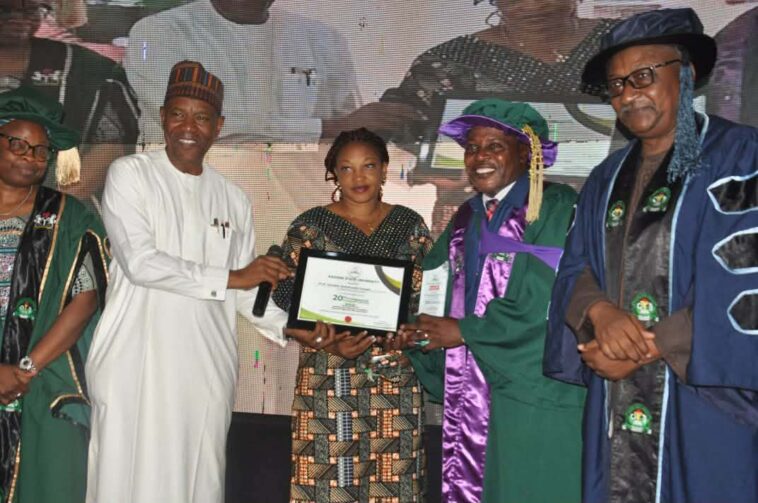
The event concluded with the presentation of a commemorative plaque and certificate to Prof. Joseph by the Chairman of the KASU Inaugural Lecture Committee, Prof. Bala Dogo, alongside former Vice-Chancellor of Federal University Kashere, Prof. Umar Pate, and other principal officers of the university
By Felix A. Sha’adu