
 Ogona Anita
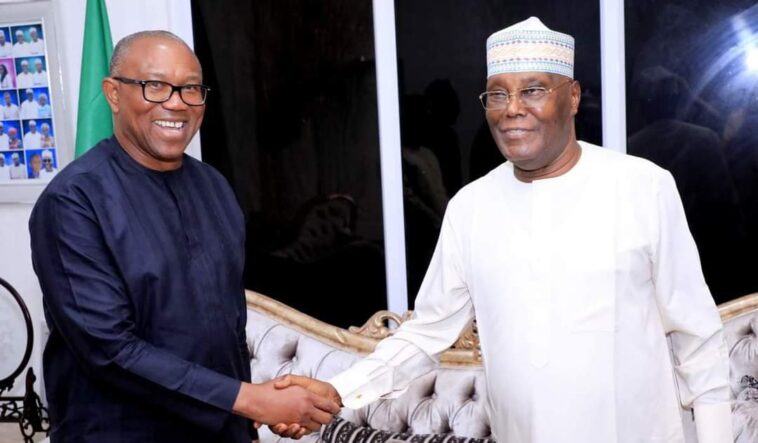
According to a video post shared on SYMFONI TV, The Labour Party’s 2023 presidential candidate, Peter Obi, has firmly dismissed growing speculation about a possible joint ticket with former Vice President Atiku Abubakar ahead of the 2027 general elections, ending weeks of intense political debate within opposition circles.
For months, Nigeria’s political landscape has been dominated by discussions around a proposed “Third Force” mega-coalition involving key opposition figures, including Atiku Abubakar and former Kano State Governor, Rabiu Kwankwaso. The proposed alliance was widely seen by political observers as an attempt to present a united front capable of challenging the ruling All Progressives Congress (APC) in 2027.
Within that conversation, reports had suggested that negotiations were ongoing for a potential power-sharing arrangement, with some analysts claiming that Peter Obi might be considered as a vice-presidential candidate on a joint opposition ticket, similar to the 2019 electoral arrangement when he ran alongside Atiku Abubakar under the Peoples Democratic Party (PDP).
However, Obi has now categorically rejected such suggestions, making his position clear in what many of his supporters are describing as a decisive political statement.
“I am contesting for President, not Vice President,” Obi reportedly declared, shutting down speculation that he had agreed to serve as a running mate in any proposed coalition arrangement.
He stressed that his political ambition is rooted in a desire to provide leadership that directly addresses Nigeria’s economic challenges, insisting that his mission cannot be achieved from a subordinate position.
Obi reiterated that Nigeria’s current economic struggles require a leadership approach focused on accountability, productivity, and structural transformation, particularly in shifting the country from a consumption-based economy to one driven by production and value creation.
According to him, his vision for Nigeria demands full executive authority, as he believes that meaningful reform cannot be effectively implemented without being at the helm of government.
While dismissing the vice-presidential speculation, Obi maintained that he remains open to collaboration with other political actors who genuinely share the goal of national recovery.
He emphasized that a credible coalition is possible, but only if it is built on mutual respect, clear ideology, and a genuine commitment to national interest rather than political convenience.
Obi also highlighted the importance of the youth population in shaping Nigeria’s political future, noting that any alliance or political arrangement must reflect the aspirations of young Nigerians who form a significant part of his support base.
He argued that the energy and expectations of the youth movement cannot be sidelined in negotiations driven by elite political interests, warning that ignoring grassroots sentiment could weaken any proposed political structure